Categories
Uncategorized

Smile Down the Runway Review

Smile Down the Runway | Anime-Planet
Cover Art from Google Images

As soon as I discovered this anime, I had to watch it. I’m obsessed with design shows–Project Runway, Next in Fashion, all of them. I love seeing the creativity of the designers and the amazing things they come up with.

I thought, “Wow! Smile Down the Runway might just be an anime version of Project Runway!”. 

I was sort of right.

Smile Down the Runway starts with Chiyuki Fujito, a rich, spoiled teenager whose greatest dream is to be a model in her father’s agency, Mille Neige. However, her father, who loved and spoiled Chiyuki as a child, has now changed his tune and continues to have members of his agency tell his own daughter that she has no talent and that she will never be a model because she is too short. “Industry standard” is at least 175 centimeters, or about 5’7″, and Chiyuki falls far short of that. 

By chance, Chiyuki meets Ikuto Tsumura at school. Ikuto dreams of becoming a fashion designer, but an ailing mother, three younger sisters, and tight finances are forcing him to work after graduation instead of pursuing his dream. After meeting him, Chiyuki pushes her own desperation to reach a seemingly impossible dream onto Ikuto, and the two become an unlikely duo on a quest to join the fashion scene.

The approach the show takes to the real life problems of the fashion industry is complicated. It constantly enforces the idea of the ridiculous requirements that the model industry enforces. However, it says that models are only there to showcase the clothes. Odd then that there are such strict requirements. At one point in the show, Chiyuki is praised for how small her waist is, told that you don’t achieve that by eating twice a day. A teenage girl. Is praised for starving herself for a shallow industry. Don’t love that. At the same time, they show Chiyuki, a shorter model, as an icon of diversity in the industry. One short model does not equal diversity.

Although, based on what I’ve seen in other shows, this is a fairly accurate representation of the industry. Even when Project Runway and Next in Fashion bring in models that look anything like real, healthy people, they treat them as “others” or challenges for the contestants. 

Midway through the anime, Ikuto starts to get more serious about design, and both he and Chiyuki might have hit lucky breaks. Chiyuki lands a gig as a magazine model, and Ikuto is in the highest rankings of a local design competition. However, both of them have difficult lessons to learn and realizations they must face. Ikuto especially faces competition and harsh lessons from more experienced designers. His recurring theme is choosing between his own dreams and caring for his family. Rivalries develop as Ikuto is given an opportunity to continue the competition despite the financial burden of his mother’s hospital bills. Chiyuki is rejected in Paris and returns to test her mettle as a model in the fashion show.

Let’s focus on characters now. 

Our protagonist, Ikuto, is full of contradictions. He can’t choose between family and design, he can’t choose between having friends or rivals, he’s either kind or crying, begging for help or offering help. He waffles throughout the entire series, making decisions last minute and always putting others before himself. That makes his dream all the more difficult. I did really identify with him though, because characters like Toh Ayano tell him he is talentless and worthless and too poor to succeed, and he reacts like a human being. He doesn’t sacrifice his family or his dream, striving for balance instead. He also acknowledges that wealthy people don’t understand the hardships of being poor, and that they always want to tell you that you aren’t dedicated enough instead of acknowledging their own privilege. 

Ikuto

Toh Ayano is a very rich, very prestigious design student, the grandson of one of the world’s top designers. He is arrogant, two-faced, and manipulative, at first being kind to Ikuto and then tearing him to shreds. Can you tell yet that I have very strong feelings about all of these characters?

The two other main characters are Chiyuki, whom I’ve mentioned, and Kokoro Hasegawa. 

Chiyuki is headstrong and a little selfish, utterly determined to attain her goal of being a “hypermodel”. She is a good friend to Ikuto, but she tends to take over situations and twist them around to suit her own desires for rivalry. I was super relieved that they were friends and rivals, and that the writers didn’t force an unnecessary romance plot onto them. Kudos for that.

Ikuto and Chiyuki bump fists

Kokoro is hardworking and dedicated, but very soft spoken and tends to break down easily. She is torn between a sure career as a model, with her abusive manager, and her dream of designing fashion.

The interactions between all of these people I found very interesting, and I’m not sure if it’s because of a limited understanding of Japanese society or added in for dramatic effect. All of these people, even Kokoro and Ikuto, who really needed to keep their jobs, were constantly challenging and arguing with their bosses. Which would be understandable if like, their bosses were treating them badly. But Kokoro tolerates treatment from her terrible manager, and balks at her coworkers or fellow design interns getting even a well-deserved rebuke. I spent half the show trying to figure out how any of these people kept jobs. If I went up to my boss and said, “I need to call someone on the clock and it’s not an emergency and also I need you to give me their number” I wouldn’t have a job much longer, especially not if I was new. Insanity.

You know what I loved about this anime though? The end.

Ikuto didn’t win the fashion show. He didn’t even rank in the top ten. But he got his happy ending, working for Toh Ayano, of all people.

Kokoro won the fashion show contest.

Chiyuki got hired as an exclusive model by an up and coming magazine, and Ayano stayed on working for his grandmother. 

The end wasn’t anything like I expected, and I love that. I would say this anime is a pretty realistic look at the fashion industry, but it’s also a nice slice of life story about people putting in hard work to achieve their dreams and realizing them in unexpected ways. The plot and characters were laid out pretty well, so if I had to give a number rating for this anime, I would go like 3.5 out of 5 stars.

Categories
Uncategorized

Anime Review: Today’s Menu for the Emiya Family

From Google Images

This anime, in one word: wholesome.

My boyfriend loves all things Fate (massive anime franchise), and so in looking for more short anime to watch together, I knew as soon as I fell upon Today’s Menu for the Emiya Family that we had to watch it. It features early versions of Fate characters in a lighthearted, slice of life comedy that focuses on protagonist Shirou Emiya’s obsession with cooking.

Each episode bears the name of a different recipe, which is cooked in that episode. There is a storyline leading to the cooking of each. Once Shirou starts cooking, he narrates every ingredient, measurement, and step of the recipe so that watchers can follow along. For me, it was like watching a really heartwarming version of Shokugeki no Soma, sans the food porn.

There are plenty of interesting, comedic characters to help (or hinder) Shirou’s peaceful cooking adventures. I’ll give you a little backstory here to help things along. There are two kinds of characters in this show: Masters and Servants. Masters are humans, like Shirou, and Servants are non-humans, be they gods or historical figures, who form pacts with human masters. Each of the Servants in this show is known by their class, which is based on the format of their powers: Saber, Rider, Caster, Assassin, Lancer, etc.

Saber is bonded to Shirou and features heavily. Her comedic quirk is that she is always hungry, a nice foil to Shirou’s love of making food–Saber loves to eat it. Servants don’t technically have to eat, but that doesn’t stop Saber. She also has the classic anime “antenna hair” that moves about depending on her mood–she may sparkle on occasion too. Also joining their household are Shirou’s older sister-like neighbor, Fuji, and occasionally Illya, another Servant who sometimes chooses Shirou’s kotatsu over her castle. 

From Google Images

In the Ryudou Temple live several servants and their masters. There is Assassin, who protects the temple. Also there is Caster, who is very much in love with her master, Souichirou. She can honestly be pretty terrifying, and Saber is not a big fan of her. Other local residents include Rider and her Master Sakura. Rider’s schtick is that she can expertly ride/drive any vehicle, which is useful when they almost get into a car accident in a later episode. Sakura is Rin’s younger sister: Rin is a bubbly, outgoing character who enjoys having fun, and is devoted to her sister and friends. 

Then there is my favorite. I considered abandoning the review so I could just write about this character, but I shall not. Lancer works at the local grocery shop, and his brash, do what I want attitude adds to his doglike charm (they refer to him as a dog in the fandom/canon). He likes to poke fun at the other characters, and is constantly enrolling them in his schemes.

Archer also joined about mid-season, for the classic anime swimsuit episode. Fanservice, anyone? He reappears later on with his Master, Rin, and his character is developed a little bit more. Archer is just as avid a cook as Shirou is, and uber-competitive, particularly with Lancer. Finally, there is Berserker, another servant who lives with Illya. He is a massive creature that everyone is afraid of at first, but he is kind and sweet and he loves Illya above all.

Anyway, before I spend this entire post talking about Lancer, let me move on to some plot and animation review.

Great animation. Character lines are clean cut, and the illustrations of food–true to the focus of the show–are gorgeous. 

As far as I can tell, there isn’t really an overall plot to this anime. It’s a series of one-shots that introduce situations entirely tailored to creating food that makes me salivate in real life. 

Since there is no plot to discuss, let’s talk about the food! Like I mentioned, the illustrations of steaming, juicy food make me hungry. I am literally starving as I write this, thinking about the karaage fried chicken that Shirou made. I seriously want some chicken nuggets now. Since Shirou, unlike many of his counterparts, is a working-class high school student, all of his recipes are affordable and use common household foods. However, since food is his lifelong obsession, he does have a lot of gadgetry and things, like a fryer, that some people may not have. I loved the fact that they featured everyday foods, making them glorious and focusing on what normal people can afford instead of the fancy ingredients you see in most cooking shows.

From Google Images

This anime makes me smile, exactly what I need during this pandemic. I think it will make you smile (and salivate!) too, so I recommend it! The episodes are only twelve minutes long, so it won’t take you too much time to get engrossed and start Googling how to make karaage chicken.

Categories
Uncategorized

Yuri on Ice Review

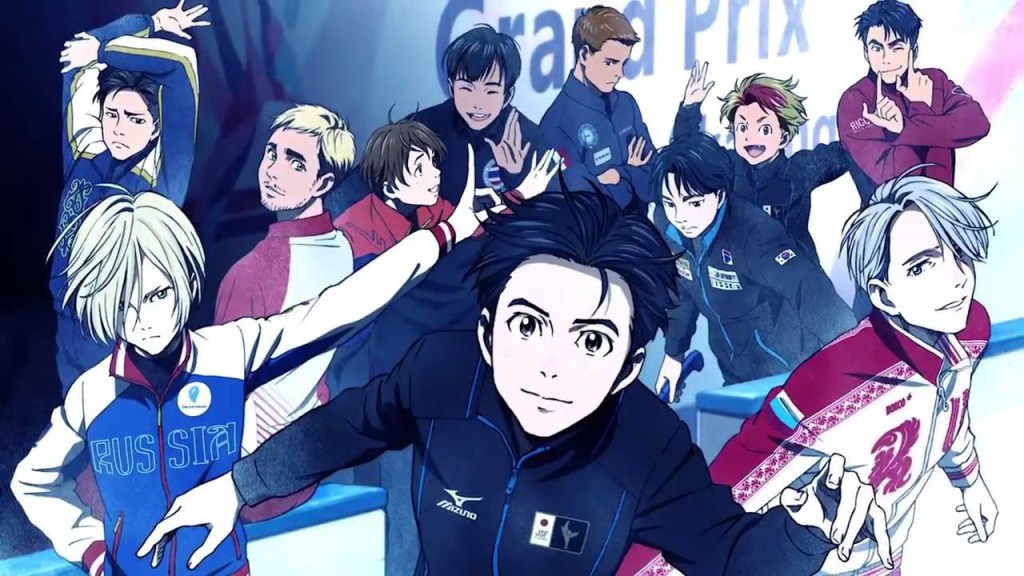
Cover Art for Yuri on Ice

Thanks for dropping back in–I decided to start, at least, with anime reviews, because I think that is more in line with the skills I am trying to practice.

The first anime I’m going to review is Yuri on Ice. This is by no means a new anime, but it’s new to me, which is a trait that will likely apply to the rest of my reviews as well. 

My boyfriend and I finished watching Yuri on Ice together last week. After years of scouring fandoms on social media, I basically knew what was going to happen, or so I thought. You see, the nice thing about the fandoms is that we can make fanart or headcanons or whatever to represent how we wanted the series to end. I was under the impression when I began watching it that Yuri on Ice was going to end with the beginning of a romance between Yuri and Victor. And that’s what I thought I was getting, for the first eleven episodes. 

We have Yuri Katsuki, insecure, down on his luck figure skating fanboy, who is filmed performing the exact same routine as his idol, Victor Nikiforov. Victor, also dissatisfied by his career, randomly shows up at Yuri’s house after seeing the video and becomes Yuri’s coach. The rest of the episodes follow their journey through skating circuits, introducing new characters along the way but mainly focusing on the relationship between Yuri and Victor. 

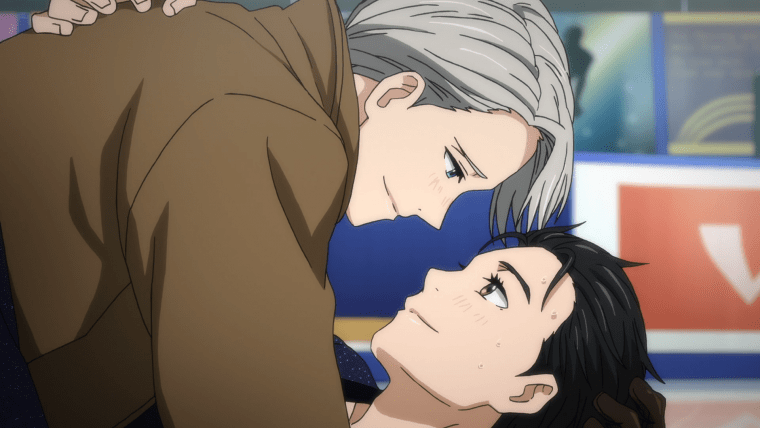
Yuri and Victor

Then we get to episode 12.

Yuri buys matching rings for himself and Victor, goes into credit card debt for them. BUT THE ENGAGEMENT ISN’T CONFIRMED. Even after that, they still make separate decisions, and the end only confirms that both of them will continue their skating careers.

After 12 episodes of devoting my heart to these “disaster gays” (after my very own heart), listening to them pledge their desire to skate together forever, keeping their eyes on each other, sleeping next to each other, that’s what I get????

It’s the kind of cliffhanger that demands a season two.

There is no season two.

I’m….

So, let’s back this up a little bit. You now have my very strong opinions about how pissed I am that my ship has not yet sailed, but to call this a semi-real review, I’m gonna give you the pros and cons of the actual show itself.

The animation is pretty good. It’s a running joke in the fandom that the animation of Victor’s abs is gorgeous, but it gets pretty bad during skate routines. Of which there are a lot. Even for a skating anime, you can start to feel like the focus is off of our protagonists. For the most part, the plot makes sense, and until the end there are no kitschy plot devices. 

Characterization is also pretty good, from a writer’s point of view. Although absolutely be prepared to hate Christophe. He’s…disturbing. Moving on from Chris, Yuri and Victor both show character growth throughout the series, with Yuri gaining confidence as the season goes on and Victor showing more humanity the closer he gets to Yuri. Yuri Plisetsky, or Yurio, another main character, shows growth both on and off the ice, finding himself as both a person and skater. (As a totally irrelevant side note, Yurio is a ferocious tiger boi and I love him.)

Also, although the season is only twelve episodes, they don’t move too quickly. The progression of the story is pretty clear until the end, without any confusing or badly done twists.

All in all, I wasn’t expecting a lot from Yuri on Ice initially. I figured it would just be another sports anime, which tend to have great animation but a bad plot, focusing on the sexy fanservice shots that cater to their chosen audience. Plenty of fanservice here, but it didn’t drown out the plot and each of the characters was well-rounded, each one of them given a clear motivation and a dilemma they needed to overcome to reach their goal.

However, I still hold that the last couple of episodes portrayed a poorly-executed cliffhanger. As a writer and as someone who has seen a lot of anime, I can appreciate leaving the story at a spot that allows you to pick up in a new season without having to come up with a whole new plotline.

I don’t think that the end of this anime particularly accomplishes that. If fans are drawn in by Yuri and Victor’s relationship, they aren’t going to abandon it after season one if they get engaged. One of the things that I dislike about a lot of romance tropes is that they focus on young people, and as soon as they get married those characters and their romance becomes unimportant. With Yuri and Victor in their 20s, it seemed like Yuri on Ice was breaking those tropes, only to bring them right back by playing coy around the engagement.

To recap, I really enjoyed Yuri on Ice. I was super disappointed by the ending, but I would definitely watch season two (if it ever comes out). Yuri and Victor are well-rounded, and their problems and reactions are relatable, their romance endearing. If you enjoy sports, romance, or comedy anime, I think you’ll love Yuri on Ice.

Categories
Uncategorized

Rounding the Corner

All this week I’ve been talking about my blogging goals. Now it’s time to take those goals and turn them into ideas for the rest of my blog posts. 

The biggest goal I’ve noted so far is that I want and need to get more experience writing regularly about my own interests. Also, I want to make sure I choose something that will lend its hand to incorporating more media.To achieve that, I have two ideas that I’ll explain here.

The first one is to use this blog as a way to further explore my deep love of poetry. I’m one of those poets who tends to write only when they are inspired, but I would love to train myself to write poetry more regularly. I was thinking that I could write a couple of poems a week on here and include either a reflection or how I planned to revise them. That checks the boxes of both being interesting to me and the bonus of practicing my poetry skills.

Sanibel Poetryfest Gathers Writers From Across Southwest Florida ...
From Google Images

The second possibility is blogging my personal reviews of anime I want to watch. With isolation making time feel like it no longer exists, I can watch more of the anime on my list. I could watch them and publish my (very opinionated) reviews of either individual episodes or seasons. Don’t underestimate my ability to watch a whole season in a week.

Tune it next week to find out which one I stick with!

Categories
Uncategorized

Staying the Course

Continuing the thread of talking about my blogging goals, I want to put up a little blurb about some possible ways blogging could help me career-wise. 

This summer, I’m planning (Corona Craziness aside) to get involved with Rowan’s chapter of The Odyssey Online, a publication where members write and put out an article each week about something they are interested in. I’ve never had much practice publishing articles based on my own interests regularly, but guess what–this blog fits that bill. I can get loads of practice improving in an area of writing that for me, has been rather difficult so far. I’m excited about that possibility–blogging to me is a unique genre because it combines my perspective on my interests with those of other people, and I value myriad perspectives. 

I also think that both this blog and The Odyssey Online will help enrich my experience when I add a second concentration, Publishing and Writing for the Public, to my major. I think that immersing myself in new, more challenging types of writing and getting experience writing for other people instead of myself will really benefit me after I graduate and (hopefully!) get a job in higher education. 

See you on Saturday for more on my blogging goals!

Categories
Uncategorized

Taking a Turn

In light of our newly virtual semester, instead of using this blog just for fact checks, I will be expanding my blogging experience by exploring my blogging goals and using them to decide on the thread of my posts for the rest of this semester. 

In this first post after moving online, I want to list my blogging goals: what I plan to give and get out of blogging this semester.

I want to use this opportunity to get better at creating ideas and content for a blog, as I transition into adding a second concentration onto my major and learning more about editing and publishing.

In the past, I’ve never really understood why people enjoy blogging and I never read a lot of blogs. I blogged for classes, but I was required to write about certain things and my interest in blogging sank even lower. However, with the chance to write about something more tailored to my interests, I may decide to start a blog of my own after this if I can discover a niche. 

Another of my goals is to discover how blogging could benefit me. Will it help my resume? Give me a place to express myself? Broaden and strengthen my writing ability?

I am still doing this for a class, so I want to make sure that my experimental blog posts receive good grades, but more importantly I want to find a way to make sure that this benefits me in the long run. 

Later this week I will put up two more blog posts discussing my blogging goals in more detail!

Categories
Uncategorized

Truth-o-meter: Pass/Fail, Live/Die–Connecting School Start Times to Teenage Auto Accidents

What’s up with car accidents and later school start times?

I was homeschooled through every grade before starting college, so I never experienced having to get up early and drive to school on time as a teenager. However, I am interested in the American education system, especially places where it can be improved, so when I found an article discussing school start times I was immediately intrigued.

Today’s fact-check will feature this article: “New study finds association between later school start times and decrease in teen-related car crashes” from ABC News. 

The context for this article is a growing protest from teenagers that school starts too early combined with a clinical hypothesis that those protests are grounded in fact. The idea that schools start too early, causing teens to get less sleep and leading to lower levels of attention and comprehension, is especially alarming when those sleep-deprived teenagers are driving automobiles. This combination has led to more investigation into the matter with a focus on whether or not later school start times can help decrease teen-related auto accidents.

(Both images from Google Images)

Now that some context is established, I’m going to start with move one, checking previous work: looking at other fact-checking sites through DuckDuckGo and seeing what other people have already investigated. Nothing comes up, although I tried various search terms, including: “school start times car accidents” and “school start times Fairfax County”. What I’m looking for is an article from one of our trusty fact-checking sites–Snopes, FactCheck, or Politifact–to see if this claim has already been investigated. No luck. Searching for ABC News using the -abcnews.com format doesn’t glean anything either. 

In that case, let’s move on. I want to know more about ABC News and the author of the article. There are a few places I want to check: Allsides, Google Scholar, and DuckDuckGo one more time for good measure. According to Allsides, ABC News leans left–not quite left, not quite center. I’m not sure how relevant this leaning is though, considering we are nott investigating a widely publicized political issue. There is no author listed for the news article, just ABC News. That lessens our workload a bit.

Using move two and “going upstream”, we can still check the journal and authors of the original study. The study referenced in our article was published in the Journal of Clinical Sleep Medicine.

Move three–“reading laterally”. Is the original source reliable? The Journal of Clinical Sleep Medicine has an impact factor of 3.46. That’s pretty good–what about the authors? According to my Google Scholar search, one of them has been cited over 1000 times, two of them are experts in juvenile medicine, and one specializes in sleep medicine. All of them seem to be reliable and knowledgeable. 

An additional part of this move is to check Wikipedia pages relating to the subject and see if any of their cited sources can help verify my the claim under investigation. I looked at the “Start school later movement” page and the “Waking up early” page. Both of them provided links to several sites that helped me fact-check our claim.

Now to the actual claim! Is there really a correlation between later school start times and less car accidents involving teens? What do other sources say about this claim? 

It seems like the consensus is a resounding affirmative on this point. A DuckDuckGo search reveals the CDC, the American Academy of Sleep Medicine, and the American Academy of Pediatrics all agree teenagers are not getting enough sleep, often because they have to wake up and get ready to start school before 8:30AM.

(Video from YouTube)

Also, although the study we are looking at is from this year, it is apparently not the first study in this vein to be published in the Journal of Clinical Sleep Medicine–there was also one in 2008. This suggests that the issue is not new, not something that was just made up to cause a stir–it is a legitimate issue that researchers have been investigating for over ten years.

(Quote from Google Images)

This was the fastest fact-check I’ve ever done. I went through three of the four moves–checking for previous work, going upstream, and reading laterally. Since this fact-check is still short, I suspect that I’m missing something, so let’s go to step number four and circle back to the original article. Did I neglect anything? Are there points that I still need to address?

I went back to the beginning and started my steps all over again. After checking the news article for new quotes or claims, I tried new searches. I punched in a direct quote from the paragraph quoted below, but I still got nothing for Snopes, Politifact, or FactCheck. 

“Results showed that the crash rate in 16-to-18-year-old licensed drivers decreased significantly from 31.63 to 29.59 accidents per 1,000 drivers after the delayed start time,” the American Academy of Sleep Medicine explained. “In contrast, the teen crash rate remained steady throughout the rest of the state.” 

(ABC News)

Since I’ve found just about everything I need to know about ABC News and the Journal of Clinical Sleep Medicine, I’m going to take some new information and see if there’s a link to the article from 2008 that I mentioned before. There is–and it brings me to the whole article, which is not hidden behind a paywall like the newer one. There are now a few more authors to check out, so back to Google Scholar it is. Just like the first time around, they are experts in adolescent and/or sleep medicine. The articles I got from Wikipedia, from the American Academy of Pediatrics and the National Sleep Foundation, both stress the importance of opening schools later to decrease “drowsy driving” accidents.

To push the limits of this fact check, I want to add a step here–let’s compare, as much as we can, the facts of the two studies. I want to know the who, what, when, where, and why of these studies and how similar their findings were. This might be difficult since I only have access to an abstract for the newer one, but let’s take a look anyway.

For clarity’s sake:

Article 1:

Who: Teenagers in school

What: Sleep times versus accident rates

When: 2013-2017

Where: Fairfax County, Virgina

Why: To see if there was a way to reduce accident rates

Article 2:

Who: Teenagers in school

What: Sleep times versus accident rates

When: 1996-2000

Where: Kentucky

Why: To see if there was a way to reduce accident rates

Both studies found that pushing the time schools started and increasing the amounts of sleep that teenagers were getting visibly reduced accident rates. Both of them had similar time frames, and both included data from before and after the changes were implemented. They compared the rates they found to other rates throughout the state where the changes had not been made, and they each covered a hefty amount of students.

Basically, I can’t find anything to fault in the methods, authors, or publications of either study. The people and groups who are in the know affirm the claims of this research, and I will have to give this fact check on the claim that later school start times are connected to a decrease in teen car accidents is true.

All of my sources are either mentioned or hyperlinked; the rest is my own, original content. Thanks for reading!

Categories
Uncategorized

Stay Away from Going Gray?

What’s up with hair dye and cancer?

Today I want to do a slightly more complicated fact check; we’re looking at an article that involves a reference to a researched study. The one that I chose is from The Washington Post, which discusses a study that suggests a correlation between permanent dye and increased risk of breast cancer, especially in African-American women. A lot of people in my family are cosmetologists or dye their hair a lot, so I’m personally very curious as to whether or not this is true.

The context for this article is the recent trend of women dying their hair gray on purpose. According to the article, even younger women are doing so, following the lead of celebrities like Billie Eilish. 

This YouTube video, published by Faith Robertson, has over 200,000 views.

The article commented on the effects of temporary, semi-permanent, and permanent dye on this risk as articulated to them by experts from the study. The original study, published by The International Journal of Cancer, explored possible connections between hair dye and cancer in white and African-American women, factoring in whether or not they dyed their hair at home or had it professionally done. 

An investigation through DuckDuckGo’s site search feature reveals a Snopes article that covered older studies on the same subject, but nothing on the study mentioned in The Washington Post. It also provides links to government and health sites that discuss whether or not hair dyes cause cancer. 

Moving on to the next step, let’s check out Wikipedia. Some of the information and source links on there led me to more specific definitions of exactly what kind of chemicals were involved in the discussion. Two of the ones mentioned were lead acetate trihydrate and p-Phenylenediamine. They were on the list of potential human carcinogens, but everything I found reported that evidence they cause cancer is inconclusive, and I don’t want to try and explain chemicals that I don’t understand.

Let’s take a moment to read across The Washington Post–how reliable is this source? By looking at the article, I can see at least that they are reporting results fairly consistent with what I noted in the study, that they reference it properly, and that they provide links to more information on it. I don’t appear to be looking at a source that is obviously biased on the subject. No impact factor comes up for this newspaper, but I find mention of Pulitzer Prizes and national recognition–seems like pretty solid writing. Just to be sure, I kept looking. Apparently The Washington Post was recently purchased by a company owned by Jeff Bezos, which may be something to keep in mind. However, Statista, Encyclopaedia Britannica, and MediaBias FactCheck, all sources I consider fairly reliable, create a consensus that agrees The Washington Post is usually factual and credible.

Checking out the author and the journal is vital. The International Journal of Cancer has an impressive impact factor of 7.36, and each of the listed authors have multiple articles published in related medical or research fields. This leads me to believe that they know what they’re talking about. 

Finally, I went upstream on the source from the original article and examined the study that was mentioned. I only understand some of it, obviously, but it is useful nonetheless. It provided a link to an organization from which the study participants were gleaned, but most importantly it gives me the original claims made and their hypothetical state. The abstract states that they did find correlations between use of hair dye and breast cancer risk, although they use equivocal language to indicate that these findings are not concrete evidence of the dangers of semi-permanent and permanent hair dyes.

At this point, I think I’ve compiled enough information to determine what the consensus is on this claim. The journal is reliable, the authors are reliable, the newspaper is reliable, so we can say with some certainty that we aren’t looking at a scam. The original study, combined with this boost of trustworthiness, is in agreement with government and health departments that make no finalized claims about the dangers of hair dyes, but do strongly suggest that users remain wary, and that more research be completed. So–if you’re thinking about going gray, or red, or purple, or teal ombre, or whatever other color you can come up with, check out the ingredients on the box, and seek a professional cosmetologist.

All of my sources are either mentioned or hyperlinked. Thanks for reading!

Categories
Uncategorized

Caucus Hocus Pocus–Were the Iowa Caucus Results Hidden?

What’s up with the Iowa Caucus results?

On Saturday morning, CNN Politics put out an article with the headline claim “Iowa’s mess is a threat to democracy”. For a fact-checker, this article is a gold mine. There are numerous claims that could be explored, but the most direct and intriguing is that “The Iowa Democratic Party made things worse by hiding the issue behind its delayed results for hours on Caucus night. Then, it released only a portion of results.” Politifact gave a similar claim a “false” rating, but let’s explore this claim for ourselves and see if we can determine its level of veracity.

First, where and why did this article get published? I encountered this article on Google News, but it could also be found on other news conglomerates, and the CNN website, TV channel, or other affiliations. The Iowa Caucus was a pivotal moment in the timeline of the Democratic side of the upcoming election. When it was released last week that there were complications with the voting results and the app that was used to calculate the ballots, there was national concern. Debate and conspiracies sparked about the origin of the issues and whether or not there was malicious intention involved on the part of the Democratic Party. 

It would also be a good idea to check out the author of the article that makes the claim, Zachary B. Wolf. Preliminary research on DuckDuckGo shows he is a longtime political journalist. A lot of his pieces are analyses, allowing a bit of the author’s bias to show through, but based on this reading he does not seem to allow his views to overtake his work, although they may provide a sheen of skepticism about the honesty of politicians. 

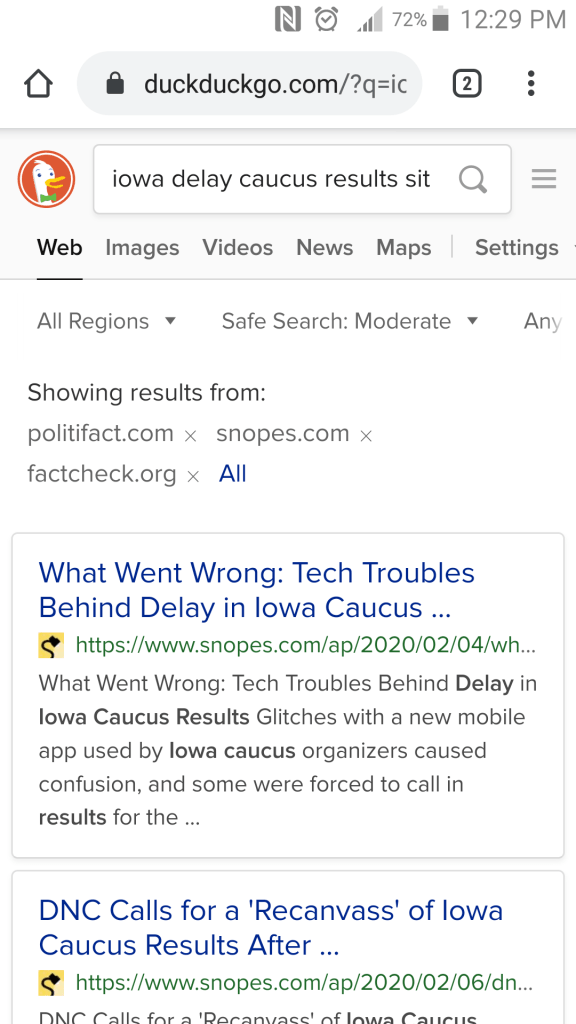
After investigating the author’s background, I did some searching on DuckDuckGo using the site search option. I found several articles on Snopes and Politifact that I used to dig a little deeper. Wikipedia backtracking provided links to related news articles, the actual results (which unfortunately and ironically did not open due to an error) and a glimmer of truth. Articles from The New York Times and other big news outlets, along with the investigations from the fact-checking sites confirm: the results of the Caucus were delayed. However, it’s a bit of a stretch to say that the issue was hidden. While the Iowa Democratic Party did not release the name of the company behind the app they were using, the information was available to the media and the public in other ways. This fact-check is really a matter of wordplay. The claims are essentially true: yes, the results were delayed, yes, only some results were initially released. The information could be worded and interpreted in various ways, so this particular fact-check is a draw. The facts are right, the wording could be a bit biased, but there is no conclusive proof of misinformation. 

This fact-check is really a matter of wordplay. The claims are essentially true: yes, the results were delayed, yes, only some results were initially released. The information could be worded and interpreted in various ways, so this particular fact-check is a draw. The facts are right, the wording could be a bit biased, but there is no conclusive proof of misinformation. 

Before we abandon this discussion, let’s take a closer look at my sources. Here are the prevalent articles I read:

https://www.cnn.com/2020/02/08/politics/us-democracy-future-iowa-caucuses/index.html

https://www.politifact.com/factchecks/2020/feb/04/organizers-bernie-2020/no-evidence-iowa-poll-or-caucus-were-blocked-democ/

https://www.politifact.com/article/2020/feb/04/what-we-know-about-shadow-acronym-and-iowa-caucuse/

https://en.wikipedia.org/wiki/2020_Iowa_Democratic_caucuses

The articles from Politifact served both to give an unbiased overview of the situation and debunk the idea that the Iowa Democratic Party was hiding results. They also provided information on the software side of the issue, which is a discussion for another post. The Wikipedia page on the Iowa Caucus was not as helpful as the encyclopedia was during my first blog post, but it helped to convince me that the truth was more complicated than the original CNN article suggested. 

That’s the verdict. Delayed results does not mean deliberate dishonesty, but it does leave some lingering questions about digital integration into our voting methods. What is the best way to vote in the modern era?

All of my sources are either mentioned or hyperlinked, and the rest is my own original content. Thanks for reading!

Categories
Uncategorized

Political Memes: Playing with Truth

What’s up with political memes?

I rarely get involved in politics, but political memes invade even my everyday life. These memes are created by all generations, from Boomers to Gen Z, and a lot of them make vast, general claims about politicians as if they are fact. In this blog post, I want to explore a meme that makes purported statements of fact, attempting to determine its origins and contexts and the veracity of its claims. 

When I did a Google Search of “political memes from 2019”, I found this gem, which makes at least three claims that can be verified or disproved:

From Google Images

Let’s start with the context and origin of this meme. Contextually, the recurring debate in America over immigration laws and a border wall, a hot topic of argument on political platforms for the past several elections, creates an ideal atmosphere in which this meme can circulate. Senator Chuck Schumer particularly has been a big name in the discourse concerning whether or not to build a border wall between the United States and Mexico. The origin, according to Politifact, is partisan group The Right View Of Washington State. Considering that Trump made essentially the same statement on television early last year, it’s likely that the meme originated from the President’s words.

Now let’s look at the claims this meme makes.

The first claim is that Chuck Schumer supported a 25 billion dollar plan for a border wall in 2014. How true is it?

Turns out, Schumer did support an expensive border deal, but in 2013 instead of 2014. Schumer pushed S.744: Border Security, Economic Opportunity, and Immigration Modernization Act to be passed in 2013, which would have allowed for stricter border enforcement, opportunities for illegal immigrants already in the country, and would have attempted to tailor the kinds of people immigrating into the United States. Along with several other big names in politics, such as Hillary Clinton and Barack Obama, Schumer also helped vote in The Secure Fence Act of 2006, a bill meant to prompt the creation of a fence on the U.S.-Mexico border, as well as making changes to U.S. immigration policies. 

The second claim is that President Trump’s border proposal is worth about 5 billion dollars. This claim appears to be mostly true; according to Politico, 5.7 billion dollars was the desired amount cited by Trump during the 2018 government shutdown, who vocally disapproved of the border deal offered by Democratic politicians:

The last claim is implied by the meme to be in opposition to the first, that despite Schumer’s previous interest in building a wall, he no longer wants to do so now that a Republican is president. Based on my research, this claim appears to be false. This verdict is mainly based on the fact that Schumer offered to support a 25 billion dollar border wall deal in exchange for Trump supporting Schumer’s Dreamer policies, and only rescinded the offer when Trump refused to agree to the terms. The meme’s claim that Schumer no longer supports the wall merely because Trump is a Republican is incorrect, whatever other disputes there may be between the President and Senator. 

Here’s an insight into my research process, so you know I’m not making all of this up.

For the most part, I stuck to some common fact-checking sites. Using the DuckDuckGo search engine, I looked for specific, relevant terms on Snopes, FactCheck, and Politifact. Most of the articles that I found were on Politifact; I found the first several by searching “chuck schumer 25 billion border wall”. This brought up articles from FactCheck and Politifact, one of which was actually about the meme, and others about Schumer’s previous involvement in constructing a barrier. I also used the sources from these articles to move upstream and find earlier news articles about Schumer’s border wall history. I struck gold through one of these sources, which led me straight to the Senate proposal from 2013. I also found several more articles to verify my original findings by searching for “trump border wall” and clicking on the Wikipedia page. The Wikipedia footnotes brought me to sources that stated similar facts to the ones I found in my earlier searches, letting me know that I was on the right track. 

Screenshot of the Wikipedia page I used to outsource

This is also how I determined the veracity of the claims, based on whether or not a lot of reliable sources all said the same things. When Politifact, FactCheck, The New York Times, and PBS all agreed, I was satisfied. The balance between fact checking sites, news sites, and the information I gleaned from Congressional archives provided a rounded overview of the issue and enough information to verify or disprove the claims made by the meme. 

To review, the claim that Schumer previously supported a 25 billion dollar border deal is based in fact, but is not entirely true out of the proper context. The claim that Trump pushes a 5 billion dollar border deal is essentially true, with variants on the exact amount. The claim that the only reason Schumer does not currently support a border wall deal is because Trump, a Republican, is president, is false.

Thanks for reading my post! I hope this gives you an idea of the context behind claims, and how to check them out for yourself.

All of my sources are hyperlinked or mentioned. The rest is my own, original content.

Design a site like this with WordPress.com
Get started